Friday, July 26, 2013

HANDS OFF OUR ELEPHANTS


CONSERVATIONISTS ISSUE A RED ALERT AS POACHING OF JUMBOS INTENSIFIES
Nairobi, July 26thConservationists in Kenya have issued a warning that poaching could exterminate elephants in the next 10 years unless measures are undertaken to stem this crisis.
Led by WildlifeDirect, a world life conservation charity organization, they now want the Government to respond to the crisis as a national disaster and work with all sectors to address it.

According to Dr Richard Leakey, former Director of KWS and the Founder of WildlifeDirect, there has never been such a level of killing as we are experiencing today, unless we do something now elephants will be gone from the wild within the next decade. Leakey is credited for bringing an end to poaching in 1989

Today the situation is worse. Until the elephants are physically counted by an independent group we need to be very wary. We need to change things urgently and find creative solutions. Kenya’s wildlife belongs to the citizens of Kenya’s who must stand up to defend this heritage.  I believe that partnerships with private sector are critical. We cannot afford any further delay and we have to be tough!” warned Dr Leakey.
WildlifeDirect has announced their partnership with Key stakeholders in Government, NGOs, Private Sector, local celebrities, community leaders, corporate organizations to mobilize the nation in a joint effort to save elephants.

The movement dubbed HANDS OFF OUR ELEPHANTS calls for action by Kenyans of all walks of life to help. The campaign seeks to create awareness about the crisis, and demand for a massive surge in anti-poaching and investigations at ports to crack down on corruption and trafficking of ivory, followed by convictions that send criminals to jail for tens of years. The public can help by providing information through the use of a wildlife crime hotline. 

Speaking during the Press briefing, Cabinet Secretary for Water, Environment and Natural Resources, Prof Judy Wakhungu, said the government is fully supportive of this initiative. She added that the new wildlife legislation will soon be presented to parliament for endorsement. 

“We need the help of partners and we will also do our part. Under this new legislation, anyone found dealing in trophies of ivory or rhino horn will be liable to a fine of not less than one million shillings or imprisonment for a term of not less than five years or to both, while poachers will be liable to a fine of not less than three million shillings or imprisonment for a term not less than five years”, said Prof Wakhungu.

Kenya Airways CEO, Titus Naikuni, a key partner in the campaign noted that his airline will not allow delivery of poached goods across the borders and any staff found engaging in illegal activity will be dealt with.

Speaking for Vision 2030, Director General Mugo Kibati added that “Kenya has hardly begun to tap the economic potential of her wildlife tourism. We welcome this initiative as it will ensure that Kenyans realise the country’s economic aspirations. Tourism is key to the economic pillar of Vision 2030 and without wildlife, there will be no tourism. Losing elephants threatens the very stability of our country. ” 

The demand for ivory in the Far East, particularly China, has attracted criminal cartels to Kenya who are feeding the insatiable demand for ivory in the Far East, especially China and Thailand. Conservationists warn that unless the demand is extinguished, poachers will wipe out Africa's elephants. 

CEO Wildlife Direct Dr. Paula Kahumbu lauded the government for welcoming the initiative which brings Kenyans together to save the country’s heritage. 

 “Kenya traditionally has been at the frontline in combating elephant poaching but we have lost that ground in recent years. It is essential that we work together and restore our leadership position in the world to ensuring that we protect our endangered species, and a global heritage. While we crack down on wildlife crime in Kenya, we also need the help of governments of Africa, Thailand, China, and USA whom we are asking to ban the domestic markets of ivory as legal markets are a cover for laundering illegal ivory. We will also appeal to the hearts of anyone buying ivory in these countries as they are contributing to the slaughter of African elephants”. 

The HANDS OFF OUR ELEPHANTS campaign is a plea to every member of the public and all sectors of the economy to champion the campaign against elephant poaching. The First Lady, Mrs Margaret Kenyatta is the campaign patron. A similar effort has been announced by Hilary Clinton in USA who seek to coordinate actions of the US based conservation community around this crisis. 

The situation facing Kenya is grave. According to the Kenya Wildlife Service, (KWS) poaching is escalating out of control, the country lost 384 elephants to poachers in 2012 up from fewer than 50 just five years ago. For every matriarch killed several young will also have died. The country is also witnessing a surge in poaching by local communities who are using traditional methods including poison arrows, spears and traps.  Tanzania with 70,000 elephants report that they are losing 10,000 elephants per year, and conservationists warn that these poachers will move to Kenya once Tanzania herds are depleted. 


For more information, kindly contact: Vata Nganda, Senior strategist TBWA Kenya on 0736436157 or Email: vata.nganda@tbwa.co.ke


Wednesday, July 24, 2013

Africa Jungle in Images (Part 1)

Typically, everyone knows that if there is a time to be on safari is now! Especially in the Masai Mara, because of the wildebeest! Earlier today, i was looking at these awesome wildlife and environs images on National Geographic, and i just had to share this with you! Africa is beautiful, but our wildlife is to die for! Check this images and give me your opinion?!

Photograph by Peter Stanley, National Geographic Your Shot

Jameson’s Mamba, Cameroon
Photograph by Mattias Klum, National Geographic

Lion Pride, Serengeti Photograph by Michael Nichols, National Geographic

Cheetahs, Kalahari Desert - Photograph by Gus Mills

Wednesday, July 3, 2013

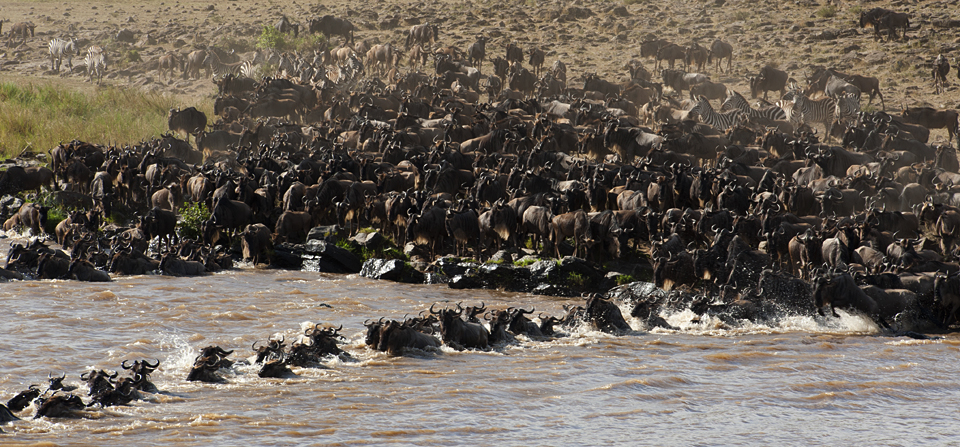
The Migration is on!

So very typical, any safari enthusiast or consultant will tell you that this is it! The Wildebeest migration is on!
Reports indicate as from late last week, the sighting of these amazing and unique creatures have been seen both from the Loita Plains and the Serengeti.


About the Migration: 
Each year, round about the same time, thousands of Wildebeest, some Topis and Zebras move across from the Serengeti in Tanzania, across the Mara river into the Masai Mara reserve. The migration is accredited to change of weather patterns across the Serengeti and Masai Mara Eco-system, these animals are said to move in search of their "survival" looking for fresh grazing areas.
 

Even though this is considered one of the most expensive periods to travel to the Masai Mara, it is very possible to get a good travel deal to witness the Migration. Also, you could always consider camping if you are a group or join one of the many camping groups that have set departures across the migration season (July - end October) and be assured to have an adventure of your life time!

For bookings or enquirers to experience the Masai Mara, email me.

Images courtesy of Google.

Tuesday, May 21, 2013

HER GADGETS: Pickpocket Alarm

Ever visited a place and while you were walking on the streets, you felt like a walking target of those hands that just seem to like your pockets more than the hand's owner's pockets? The sly pickpockets of the world and especially Nairobi, have met their match: Doberman Security’s tiny watchdog holds cell phones and wallets securely in place. Thanks to the pull pin trigger, if anyone tries to lift them from your pocket, they—and you and even the auditory-impaired people around you—will hear a 95-decibel alarm (louder than the average lawnmower).

Isn't this just beyond cool? !!!!

Saturday, May 18, 2013

Budget Travel Tips

 In Kenya, it's currently the low season period, which means the hotel/lodge rates are mostly cheaper than they usually are! It also means that if you have been planning for a trip and are tight on budget, this is the best time for you to pack up and head for that much awaited getaway!Although we are half way off the season, here are some tips that can guide you while planning for a budget trip.

1. Travel off- season.
Unlike most countries who base their travel seasons on their weather seasons, In Kenya our travel seasons are built around periods where we receive high numbers of tourists, due to the attractions such as the Masai Mara Wildebeest Migration or Public holidays. 2nd January - 31st March is termed as green season, 1st April - 30th June termed as Low season, 1st July - 31st October is High season, 1st November - 20th December is Green season and 21st December -1st January is High season. This would therefore serve as a guide as to which travel dates would be most suitable to fit your budget.

2. Travel on double occupancy.
This basically means, sharing a room with someone is generally bound to be cheaper.

3. When flying to the destination, plan well in advance.
This is how it works with a majority of the airlines, if you book and have your ticket issued as early as possible, you are more likely to buy it way cheaper than the person who buys it one week to the travel date. With airlines it's the earlier you buy, the cheaper it will be.

4. Buy package deals.
Package deals usually consist of everything including transport, and most times, they are negotiated rates meaning if you buy each part of your travel separate, it will probably cost much more!

5. Brown bag healthy snacks and meals to avoid pricey airport or train food. Book a hotel room with a kitchenette, to save on meals.

6. Consult with your travel agent to preplan trips; surf the Internet for immediate deals. Basically, do a bit of research to make sure that you are getting the best out of you money's worth!

7. Ask your travel agent where to change your money to get the best exchange rate, if you are a non resident.

8. Be flexible with your travel dates. At time weekdays are much cheaper than the weekend rates.

9. When going by car, use the most fuel-efficient model on hand (subcompact, compact and hybrids are best). To save even more gas, use cruise control, keep to the speed limit, run the air conditioning as little as possible and pack the trunk before loading down the roof.